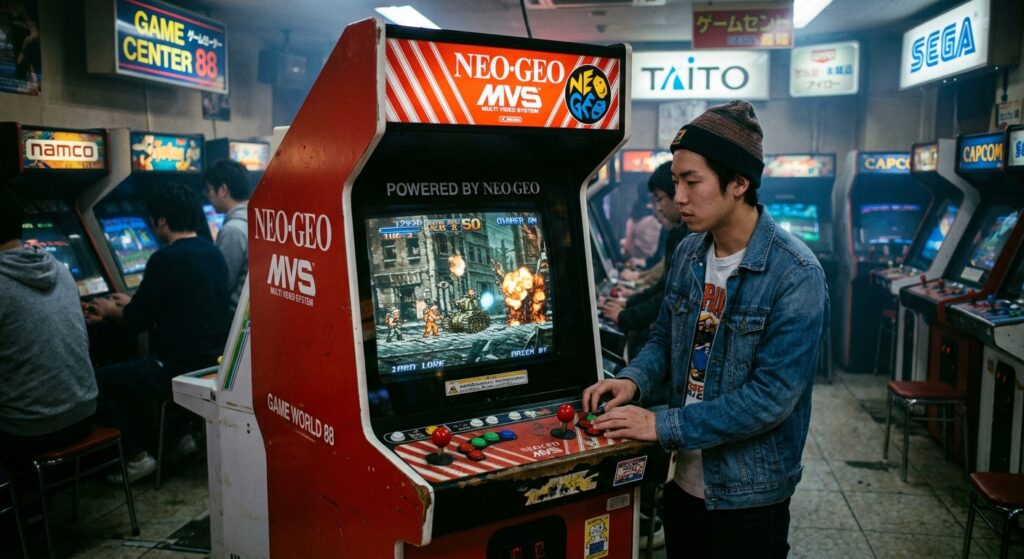
There was a time when visiting an arcade was one of the best ways to experience video games. The sound of arcade machines, the excitement of challenging another player, and the competition for a high score made these places special. During the 1990s, one name became particularly important among arcade enthusiasts: Neo Geo.
Developed by Japanese gaming company SNK, Neo Geo became famous for its impressive 2D graphics, powerful sound, memorable fighting games, and arcade-quality experiences. While other companies focused on bringing arcade games to home consoles with various compromises, SNK took a different approach.
The idea was simple but ambitious: give players the opportunity to enjoy arcade-quality games at home.
Decades later, Neo Geo remains one of the most recognizable names in retro gaming. Its legacy lives on through legendary franchises such as The King of Fighters, Fatal Fury, Samurai Shodown, and Metal Slug.
So, how did Neo Geo become such an important part of video game history?
The Beginning of Neo Geo in 1990
Neo Geo emerged in 1990, when SNK introduced a gaming platform designed to serve both arcade operators and home players.
At the time, arcade machines often delivered experiences that home consoles struggled to reproduce. Differences in hardware, memory, graphics, and sound could make home versions feel noticeably different from the original arcade games.
SNK wanted to overcome that problem.
Rather than creating completely separate versions for arcades and homes, the company developed closely related systems that could run the same games. This approach became the foundation of Neo Geo’s identity.
SNK introduced two important systems: the Multi Video System, commonly known as MVS, for arcades, and the Advanced Entertainment System, or AES, for home use.
The result was an unusual gaming platform that allowed arcade enthusiasts to experience many of the same games outside the arcade environment.
Neo Geo MVS: Bringing Multiple Games to Arcades
The Neo Geo MVS was designed with arcade businesses in mind.
One of its most practical features was its ability to support multiple game cartridges in a single cabinet. Depending on the cabinet configuration, operators could offer several games without needing a separate machine for each title.
This was a significant advantage for arcade owners. Instead of dedicating valuable floor space to numerous cabinets, they could offer different experiences through a single system.
Players could choose from different games, while operators had more flexibility in managing their machines.
The MVS also helped SNK build a recognizable presence in arcades around the world. Its library included fighting games, sports titles, action games, and shooters.
The system became particularly associated with competitive fighting games, which attracted players eager to test their skills against friends and strangers.
For many retro gaming fans, the sight of a Neo Geo arcade cabinet still brings back memories of crowded gaming centers and intense multiplayer battles.
Neo Geo AES: Arcade Gaming at Home
The Neo Geo AES was the home counterpart to the MVS.
What made it special was its ability to deliver versions of games that closely matched their arcade counterparts. During an era when home ports frequently involved compromises, this was a major selling point.
However, there was one significant problem: the price.
The AES was a premium product. Its hardware and large game cartridges were expensive compared with more mainstream home consoles. As a result, it remained out of reach for many ordinary players.
Initially, the home system was offered through commercial rental arrangements before becoming available for general retail sale in 1991.
This unusual business model helped introduce the idea of bringing the arcade experience into the home, but the high cost also gave Neo Geo a reputation as a luxury gaming system.
Even today, original AES consoles and certain cartridges are highly sought after by collectors. Their appeal comes from a combination of gaming history, hardware design, nostalgia, and the desire to own a piece of the arcade era.
The Fighting Game Revolution
Fighting games became one of the biggest reasons for Neo Geo’s popularity.
During the early 1990s, the genre was attracting huge audiences. Players wanted responsive controls, distinctive characters, exciting special moves, and competitive matches that rewarded practice.
SNK built a strong reputation by developing games that delivered these experiences.
Fatal Fury
Fatal Fury: King of Fighters helped establish SNK as a major name in fighting games. It introduced players to characters such as Terry Bogard and Andy Bogard, along with a story centered on martial arts competition and revenge.
The series continued to evolve through later releases, improving its combat systems and expanding its roster.
Terry Bogard eventually became one of SNK’s most recognizable characters, representing the company’s fighting game legacy.
Art of Fighting
Art of Fighting brought another dimension to SNK’s fighting game lineup. Its dramatic character presentation, powerful-looking attacks, and cinematic touches helped distinguish it from other games of the period.
The series also contributed characters and ideas that became part of the wider SNK universe.
The King of Fighters
Few franchises are as closely associated with Neo Geo as The King of Fighters.
First released in 1994, the series brought together characters from several SNK franchises and introduced team-based fighting to the center of the experience.
Instead of choosing only one fighter, players assembled teams and fought through multiple opponents. This format created new strategic possibilities and made competitive matches particularly entertaining.
Annual releases throughout much of the 1990s helped the franchise develop a loyal following.
For many players, The King of Fighters ’98 and The King of Fighters 2002 remain favorite entries because of their large rosters, fast-paced combat, and competitive depth.
The series also helped SNK build a connected universe of memorable characters.
Samurai Shodown: A Different Kind of Fighting Game
While many fighting games focused on punches, kicks, and elaborate combinations, Samurai Shodown offered a different experience.
First released in 1993, the series emphasized weapon-based combat. Battles often revolved around timing, spacing, and carefully chosen attacks rather than simply executing long combinations.
The possibility of dealing enormous damage with a well-timed strike gave matches a tense atmosphere.
Its historical Japanese setting, distinctive character designs, and dramatic combat helped it stand apart from other fighting games.
Samurai Shodown also demonstrated that Neo Geo could support a wide range of fighting game styles without relying on a single formula.
Metal Slug: The Arcade Classic That Still Stands Out
Fighting games were not the only reason to remember Neo Geo.
The Metal Slug series became another major part of the platform’s identity. Combining run-and-gun action, detailed pixel art, memorable vehicles, and humorous animations, it offered a different kind of arcade excitement.
The original Metal Slug arrived in 1996 and introduced players to a colorful battlefield filled with enemies, weapons, explosions, and unusual situations.
What made the series special was its presentation. Characters reacted to their surroundings, enemies displayed exaggerated animations, and the environments contained details that encouraged players to pay attention.
The games could be challenging, especially when players tried to complete them without losing lives. However, their responsive action and distinctive art style made them easy to revisit.
Later entries expanded the formula with more vehicles, weapons, locations, and increasingly elaborate encounters.
Even players who never owned a Neo Geo console may recognize Metal Slug from arcade collections, modern re-releases, or retro gaming videos.
Why Neo Geo Games Looked So Impressive
One reason Neo Geo developed such a strong reputation was its focus on 2D presentation.
During the 1990s, developers experimented with increasingly advanced graphics, and the industry gradually moved toward 3D gaming. Neo Geo continued to demonstrate how much could be achieved through detailed sprites, carefully designed backgrounds, and expressive animation.
Its games featured large characters, colorful environments, elaborate attack effects, and memorable visual designs.
The platform’s cartridge-based architecture also supported substantial game data for its time. SNK’s marketing famously highlighted the large memory capacities used by some of its games.
But impressive specifications alone do not explain Neo Geo’s lasting appeal.
The real achievement was how developers used the hardware. Excellent animation, strong art direction, responsive controls, and carefully designed gameplay helped many Neo Geo titles remain enjoyable long after their original release periods.
Neo Geo CD and the Portable Systems
SNK eventually expanded the Neo Geo family beyond its original arcade and home systems.
The Neo Geo CD arrived in the mid-1990s and offered a disc-based alternative to the cartridge system. Using CDs could reduce software costs, although loading times became a notable drawback in some games.
SNK also entered the handheld gaming market with the Neo Geo Pocket in 1998 and the Neo Geo Pocket Color in 1999.
These portable systems offered a different way to experience SNK games. The Neo Geo Pocket Color, in particular, developed a following thanks to its colorful display and library of portable titles.
Games such as SNK vs. Capcom: The Match of the Millennium helped demonstrate that SNK’s fighting game expertise could work well on a smaller screen.
Although these systems did not reach the same level of mainstream recognition as the original arcade platform, they remain interesting parts of the company’s history.
Why Neo Geo Became So Expensive
Neo Geo’s high cost has become part of its legend.
The AES was positioned as a premium home gaming system, and its cartridges could be substantially more expensive than games for mainstream consoles.
There were practical reasons behind this positioning, including the hardware’s arcade-focused design and the cost of producing large game cartridges.
The result was a system that many children and teenagers could only dream of owning.
Some players experienced Neo Geo through local arcades, while others discovered the games through friends or later collections.
Today, collecting original hardware can be expensive, particularly when it comes to rare games, complete packaging, and sought-after releases.
Prices vary considerably depending on condition, authenticity, rarity, and region. Anyone interested in collecting should research individual games carefully before buying.
The End of an Era and Neo Geo’s Lasting Legacy
The gaming industry changed dramatically as the 1990s progressed. Three-dimensional graphics became increasingly important, home consoles became more powerful, and new competitors entered the market.
Neo Geo continued to receive games beyond its original decade. SNK’s historical material records the platform’s final software releases in 2004, giving it an unusually long lifespan for a gaming system of its generation.
Although the original hardware eventually faded from the mainstream market, its most recognizable franchises continued to attract players.
The King of Fighters, Metal Slug, Fatal Fury, and Samurai Shodown all became part of a wider gaming legacy that extended beyond the original Neo Geo hardware.
Retro collections and re-releases have also made some of these classic games accessible to newer audiences.
For older players, they offer a chance to revisit familiar experiences. For younger gamers, they provide an opportunity to discover the design principles that made classic arcade games so compelling.
Is Neo Geo Still Worth Exploring Today?
For anyone interested in retro gaming, Neo Geo is worth exploring.
Its games provide a useful look at how developers created memorable experiences through strong gameplay, visual creativity, and technical limitations that encouraged thoughtful design.
Fighting game fans can explore the evolution of SNK’s competitive titles. Action enthusiasts can discover why Metal Slug remains a favorite. Collectors can learn about the hardware, cartridges, and history behind one of gaming’s most distinctive platforms.
You do not necessarily need to purchase original hardware to experience these games. Depending on the title and your region, official collections, re-releases, and licensed platforms may offer more accessible options.
If you are interested in emulation, make sure you understand the applicable copyright rules and use game files and system software obtained through lawful means.
Final Thoughts
Neo Geo was more than an expensive gaming console. It was an ambitious attempt to bring the arcade experience into the home while giving arcade operators a flexible way to offer multiple games.
Its combination of powerful 2D graphics, memorable characters, competitive fighting games, and creative action titles helped it earn a lasting place in video game history.
From Terry Bogard’s fighting spirit to the explosive action of Metal Slug, Neo Geo created experiences that players still discuss decades later.
The gaming industry has moved far beyond the technology of the 1990s, but the best Neo Geo games remain enjoyable because their appeal goes beyond graphics and hardware specifications.
They remind us that great games are built on engaging gameplay, distinctive personalities, and experiences that make players want to come back for another round.
For more gaming history, classic game guides, GTA updates, and retro gaming articles, explore GTAUpdatesHub.